12 September 2026 · Care in Movement
The 30-Second Wins
Big goals matter, but progress often begins with one small win. Here is how active support builds everyday confidence, choice, and independence.
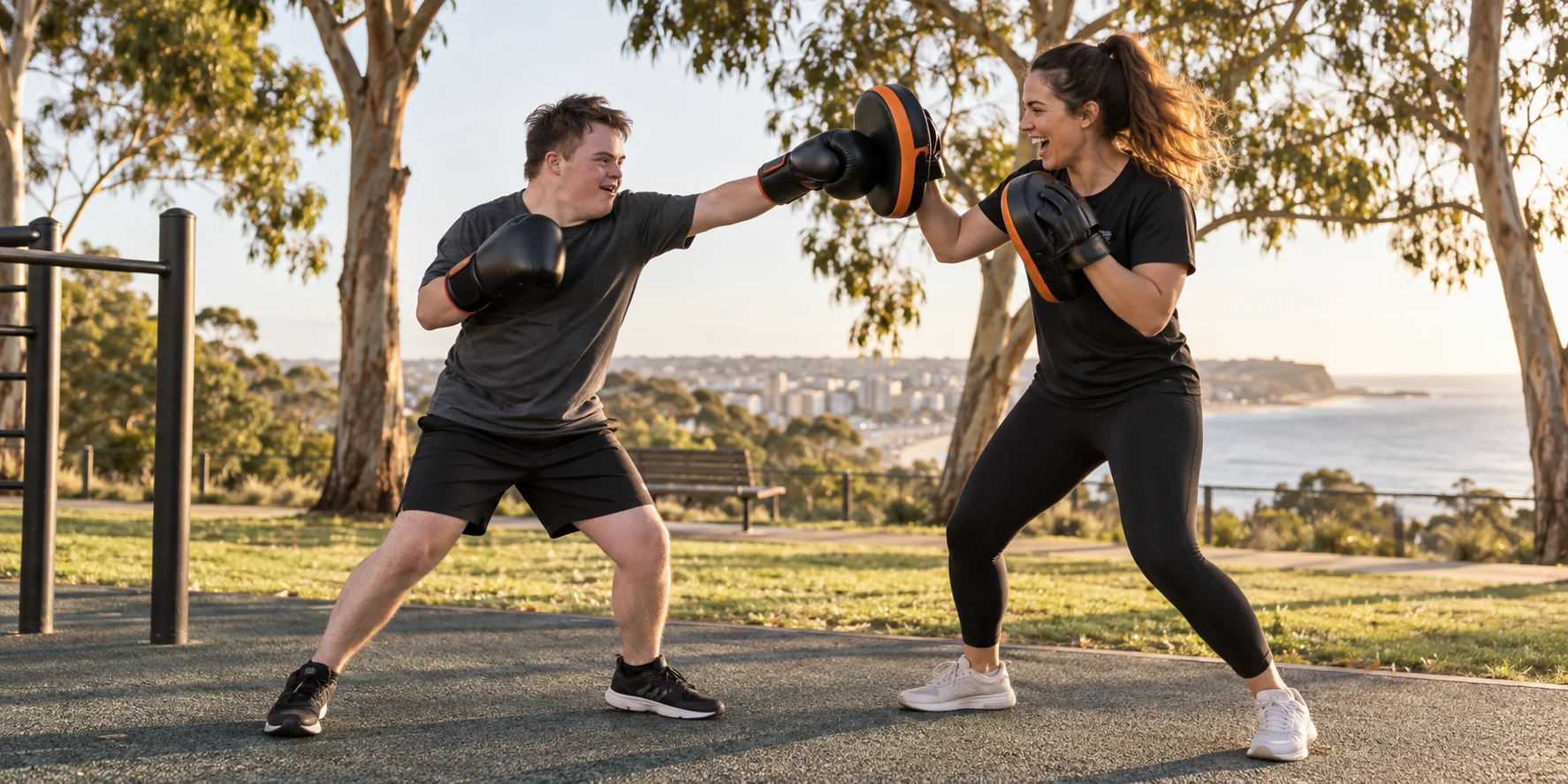
The ball comes over the net. You step forward, swing, and send it back.
It is not the winning point. It is not even a long rally. The whole thing lasts about 30 seconds.
But this time, you did not hesitate.
That is the win.
At Care in Movement, we love the big goals. The first full gym session. A new community activity. Going somewhere that once felt out of reach. But the moments that create those milestones are usually much smaller—and much easier to miss.
We call them the 30-second wins.
The moment before the movement
Often, the hardest part is not the activity itself. It is the moment just before it.
Walking through the gym door. Picking up the racquet. Joining the group. Ordering at the counter. Saying, “I’ll give it a go.”
That short moment can carry a lot: uncertainty, nerves, past experiences, or the worry that everyone else knows what they are doing.
Good support does not rush past that feeling. It makes the next step feel possible.
Sometimes that means doing the first round together. Sometimes it means finding a quieter time, changing the activity, or having a laugh when things do not go perfectly. The aim is never to perform for someone else. It is to build enough comfort to participate in your own way.
Build proof, not pressure
Confidence does not usually arrive before action. More often, it grows after a person has a few good experiences to look back on.
One successful trip becomes proof that the next trip might be manageable. One enjoyable session makes returning feel less unfamiliar. One new skill can change “I’m not good at this” into “I’m still learning this.”
That is why we focus on repeatable wins rather than dramatic leaps.
A 30-second win might be:
- Starting a conversation with someone new
- Completing one more set than last time
- Choosing the route for a community outing
- Packing what you need before leaving home
- Staying in the game after a missed shot
- Asking for help clearly, then taking over when ready
- Trying an activity once before deciding whether it is for you
None of these moments needs an audience. They matter because they belong to the participant.
What active support actually looks like
Active support is not about turning every day into a workout. It means taking part instead of having life organised around you.
At the shops, that might mean choosing the items, finding them, and paying at the checkout. At the gym, it could mean learning how to set up a machine independently. On a social outing, it might be deciding where to go, checking the bus time, or ordering lunch.
The support worker is still there—bringing energy, consistency, practical help, and the right amount of encouragement. But the participant stays at the centre of the action.
That is where movement becomes bigger than fitness. It becomes a way to practise decision-making, communication, confidence, and everyday independence while doing something real.
Let the goal set the pace
Not every win needs to look active from the outside.
For one person, progress might be a fast rally on the court. For someone else, it might be staying at a busy cafe for ten minutes longer than last time. The right pace depends on the person, the day, and what they are working towards.
Some days are high energy. Others call for a shorter outing, a calmer activity, or a change of plan. Flexibility is not losing momentum. It is part of building support that can last.
What matters is that the activity connects to a real goal and leaves room for choice.
Notice the win
Big milestones are easy to celebrate. The smaller ones need us to pay attention.
Less hesitation. More initiative. A quicker recovery after something goes wrong. The moment a familiar activity no longer needs a prompt.
These shifts can seem ordinary. That is exactly why they matter: they are becoming part of everyday life.
Independence is rarely built in one giant step. More often, it grows through small moments of action, repeated until they begin to feel natural.
Thirty seconds at a time.
Want support that gets out, gets active, and works towards what matters to you? Explore our community access and personal training support, or send us a quick enquiry and tell us what you would like to try.
Filed under · Movement NDIS Support Active Support Community Access Capacity Building